APPLICATIONS

Key applications of organoid culture

Explore the model size, culture duration, and handling needed for drug assays, disease modeling, regenerative medicine, and cell therapy process development

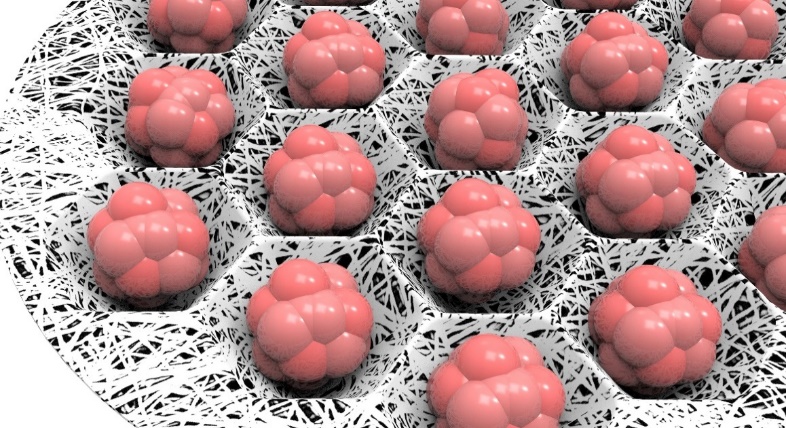
Uniform cell aggregates formed in NestWell microwells
Uniform aggregate formation on a permeable microwell array

SCREENING & EVALUATION

Drug Discovery

Accurate compound comparison starts with consistent model size and culture state

Consistent model size makes drug response easier to compare

Organoids can capture cell-cell interactions, nutrient gradients, and tissue-like structure. Yet variation in initial size and maturation can change drug penetration and viability, masking true differences between compounds. Controlling formation conditions is therefore essential for comparable efficacy and toxicity results

Automate media exchange and image the same position

NestWell is designed to support initial cell-aggregate formation in microwells selected for the target size. For repeated dosing and long-term studies, OrgaNest supplies and removes media on schedule while recording bright-field images from the same position

Experiment steps
  1. 1Choose measurements and target model size
  2. 2Form models at the target size in NestWell
  3. 3Apply compounds and assess efficacy or toxicity
  4. 4Use OrgaNest for long-term perfusion and growth tracking
Measurements
  • Mean diameter and size distribution
  • Well-to-well and batch variation
  • Viability and drug response
  • Morphology over culture time
Discuss culture methods

DISEASE MECHANISM RESEARCH

Disease Modeling

Reduce culture variation before interpreting differences in patient-derived cells

Distinguish disease-related cell features from culture variation

Patient-derived organoids are sensitive to initial cell number, aggregate size, media timing, and handling stress. Different starting conditions can alter growth and differentiation, making it difficult to separate disease-specific changes from culture artifacts

Compare growth in organoids formed at similar sizes

Evaluate aggregate formation and size distribution before using NestWell with patient-derived or engineered cells. During extended culture, OrgaNest VISION records bright-field images from the same position so growth rate and morphology can be compared across conditions

Experiment steps
  1. 1Prepare disease-relevant cells and controls
  2. 2Standardize starting cell number and model size
  3. 3Maintain growth and differentiation
  4. 4Compare morphology and phenotype over time
Measurements
  • Initial model-size distribution
  • Growth rate and morphology
  • Disease-relevant markers
  • Reproducibility across runs
Discuss culture methods
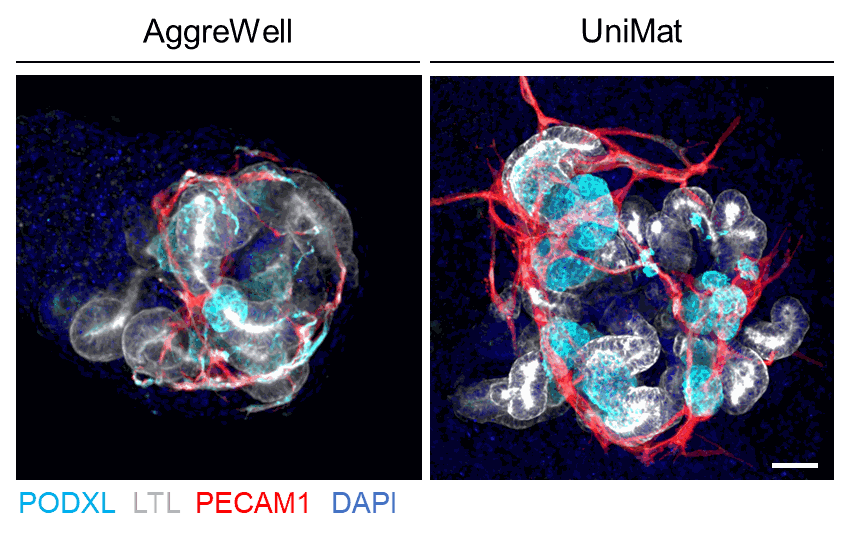
Organoid stained for tissue-specific markers
Organoid maturation and tissue-specific marker analysis

MATURATION & LONG-TERM CULTURE

Regenerative Medicine

Organoids that need extended differentiation and maturation require stable nutrient supply with less operator variation

Small handling differences accumulate during long-term culture

Regenerative medicine research must evaluate tissue-specific structure, maturation, and function in addition to viability. During long-term culture, assess exchange methods, operator variation, and any loss of cultured material

Supply oxygen and nutrients throughout long-term culture

The NestWell membrane is designed around diffusion between the microwell and surrounding medium. OrgaNest SUPPLY and PERFUSION select refrigerated media and deliver it at low flow, supporting more consistent operation during differentiation and maturation

Experiment steps
  1. 1Define target tissue and differentiation stage
  2. 2Form a uniform starting model
  3. 3Maintain long-term maturation conditions
  4. 4Evaluate viability, structure, and function
Measurements
  • Long-term viability
  • Tissue-specific maturation markers
  • Model loss during exchange
  • Batch-to-batch quality variation
Discuss culture methods
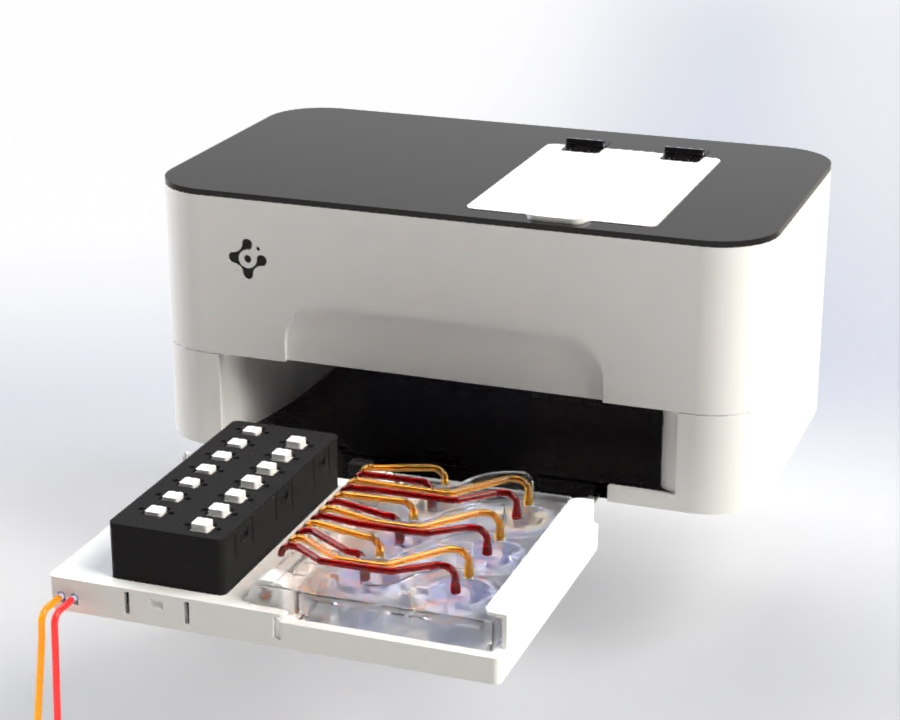
OrgaNest perfusion module with multiple culture cartridges
Modular perfusion operation for process development

PROCESS DEVELOPMENT

Cell Therapy Manufacturing

Cell therapy processes must maintain the same culture results across operators and batches

Keep media exchange and observation consistent across operators

When media preparation, supply, removal, and inspection depend on operator timing, scale-up introduces variation that is difficult to trace. Process development requires defined intervals, fewer open manipulations, and culture records that can be reviewed with quality outcomes

Start with the automation functions you need

Configure OrgaNest with SUPPLY, PERFUSION, and VISION as needed. Store and select media, supply and remove it across multiple culture chambers, and record images from the same position. Compare culture records with quality results to build evidence for process transfer

Experiment steps
  1. 1Identify culture steps that affect quality
  2. 2Set media supply and removal conditions
  3. 3Apply perfusion across multiple chambers
  4. 4Compare conditions using images and quality measurements
Measurements
  • Number of manual interventions
  • Exchange timing and flow consistency
  • Batch viability and quality
  • Operating and image history
Discuss culture methods