
Direct answer
Publications and institutional sources describe the relationship between permeable-microwell research and NestWell and OrgaNest. IBS materials and published patents provide complementary technical context. Research-platform results and patent documents are not direct commercial-product performance validation.
External evidence
An IBS seminar highlight explicitly states that the permeable-microwell platform concepts were translated into Celloid's NestWell product and the OrgaNest system combining perfusion-based media exchange with optical monitoring.
Academic evidence
The 2024 Nature Communications paper evaluates uniformity and maturity in the UniMat kidney-organoid research platform. A 2026 review synthesizes platform and automation technologies for reproducible, scalable organoid manufacturing.
Published patents and products
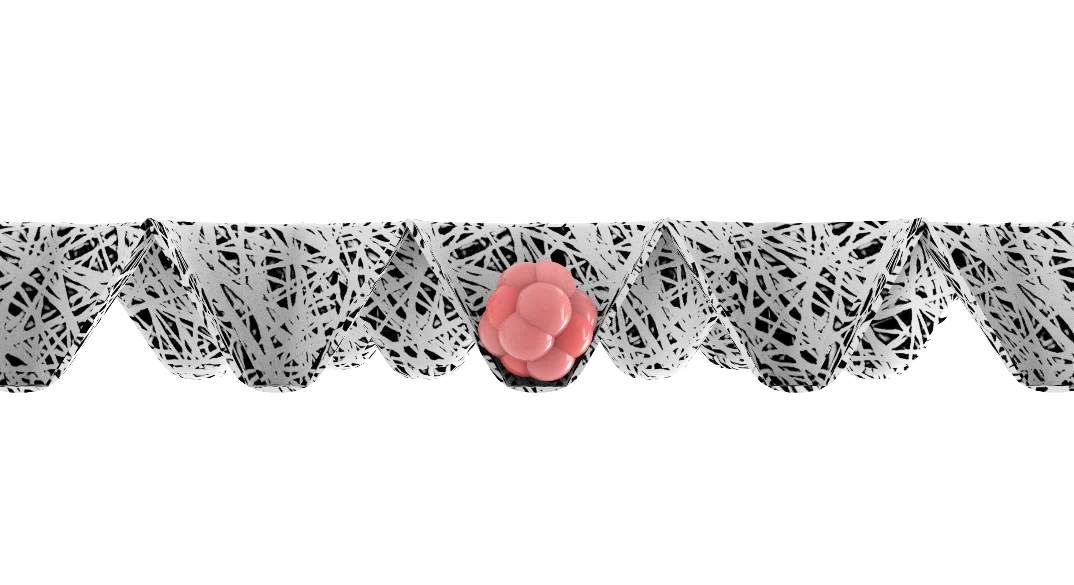
Published patent documents describe porous nanofibrous microwells and perfusion-based automated culture architectures. Because the documents do not name NestWell or OrgaNest, they are not presented as product-performance validation or a definitive claim of product-specific patent coverage.
Scope of interpretation
A research platform tested in a paper is not presented as identical to the commercial product. Product performance requires separate validation with the product, cell model, and protocol in use.
References
- Scalable production of uniform and mature organoids in a 3D geometrically-engineered permeable membraneNature Communications · 2024 · DOI 10.1038/s41467-024-53073-z
- From organoid culture to manufacturing: technologies for reproducible and scalable organoid productionnpj Biomedical Innovations · 2026 · DOI 10.1038/s44385-025-00054-6
- IBS seminar highlight: organoid manufacturing and technology translationInstitute for Basic Science · 2026
- Porous microwell, and membrane comprising same and manufacturing method thereforGoogle Patents · 2022
- Automated modular cell culture apparatus having perfusion-based culture medium transfer functionGoogle Patents · 2025